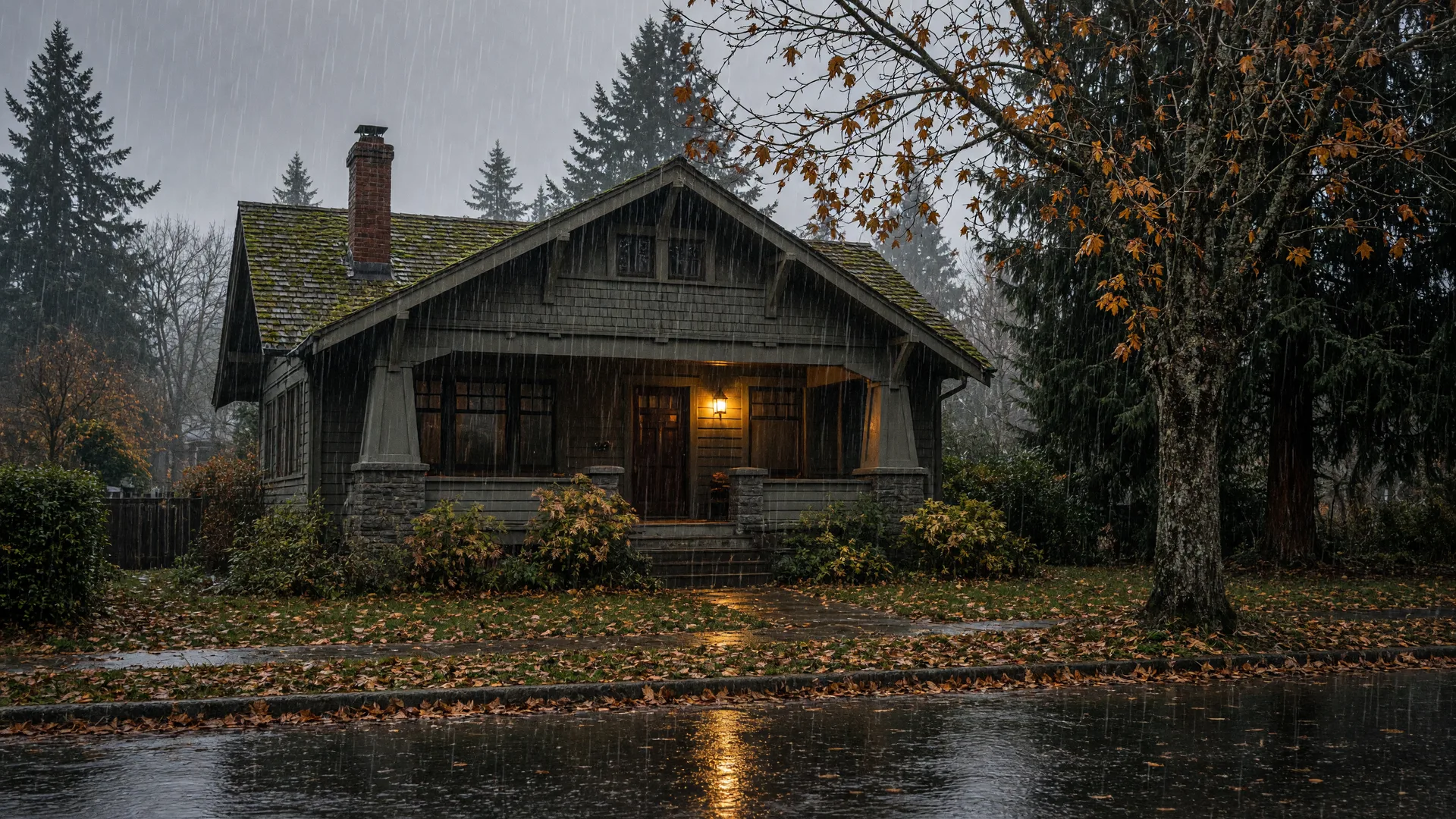
Winter is actually a very good time to buy a home in Portland, and the rain is your friend if you know what to look for. The market is leaning toward buyers, with the metro median sale price around $545,000, inventory at its highest level of 2026, and homes taking about 68 days to sell on average. A fall or winter tour also shows you how a house handles water, which is the single most important thing to know about any Portland home, because nearly all of the city's rainfall arrives between mid-October and mid-May. Here is what to check, what the current market data means for your offer, and how to buy with confidence in the wet months.
Is Winter a Good Time to Buy a Home in Portland?
Yes, for most buyers, and the numbers explain why. The most recent RMLS market report, covering September 2026, put the Portland metro median sale price at $545,000, essentially flat from a year earlier. Months of inventory climbed to 4.2, the highest of the year, a level analysts describe as balanced-to-buyer territory, and homes took an average of 68 days to sell, up from 57 days in August. Pending sales were down nearly 18 percent year over year, buyer traffic was down about 15 percent, and roughly three in ten Portland listings have taken a price reduction heading into the holidays.
Mortgage rates add context, not panic. The 30-year fixed rate drifted down from a mid-October peak near 7.40 percent to about 7.0 to 7.3 percent in early November, still roughly a full percentage point above a year ago. That is real for your monthly payment, but in a market like this it is balanced by more room to negotiate on price, terms, and repairs than buyers have had in years.
Winter also brings fewer competing offers, because many buyers pause their search through the holidays. The trade-off is honest: you may have fewer homes to choose from in November and December, but the homes that are listed are often from motivated sellers, and you get to see exactly how each property performs in the weather that matters most.
Why Does the Rainy Season Matter So Much for Portland Buyers?
Because nearly everything that can go wrong with a Portland home shows up in the rain. The National Weather Service notes that roughly 90 percent of the city's annual rainfall arrives between mid-October and mid-May, with November and December typically among the wettest months of the year. That timing is a gift to buyers: tour a home in November and the roof, gutters, grading, basement, and crawlspace are all being tested at their worst, not their best.
A home that looks immaculate on a sunny July afternoon can tell a different story when the gutters are overflowing and the yard is saturated. The buyer who looks in the rainy season gets answers a summer buyer would have to wait six months for, and those answers are exactly the ones that protect you after closing.
What Should You Check on the Roof and Gutters?
Moss is the number one roof concern in the Portland area. In the long wet season, moss takes hold on shingles, in the valleys, and anywhere the tree canopy keeps things shaded, and it acts like a sponge, holding water against the roofing and wicking it up under the courses. Over time that curls shingles, rots sheathing, and shortens the life of an older composition roof. Look for moss from the ground, and ask the inspector to check the valleys and the north side of the roof, where shade keeps things damp longest.
Gutters deserve the same attention. With leaves and moss dropping for months, clogged or sagging gutters are common, and missing downspout extensions can dump roof water right against the foundation. You are not expected to climb a ladder in a November downpour, but the inspection should cover gutters, downspouts, and roof flashings in detail, and distinguish between moss that is cosmetic and moss that is structural.
How Do You Check Drainage and Grading?
Stand in the yard in the rain and watch where the water goes. The ground around the foundation should slope away from the house, not toward it, and downspouts should carry roof water several feet away from the walls. Portland's clay-heavy soils hold water instead of draining it, so a yard that ponds after a storm can become a wet-crawlspace problem later.
Walk the perimeter and look for low spots near the foundation, standing water, and signs that water has been seeping against the siding. Grading problems are usually fixable, but they are also the kind of thing you want to know about before you make an offer, so you can budget the repair and negotiate with real facts instead of a surprise after closing.
What Should You Look For in the Basement and Crawlspace?
This is where winter tells the truth. Check for standing water, dampness on the walls or floor, mold or musty smells, and a vapor barrier in good condition in the crawlspace. Poor crawlspace ventilation is common in older Portland homes, and with water-retentive soils, seepage shows up in a substantial share of inspected homes.
The reassuring part is that most of what you find is manageable. A working sump pump, a well-sealed crawlspace, and functioning gutters and grading can turn a damp story into a dry home. The key is finding out before closing, not after the first heavy rain in January.
What About the Attic, Windows, and Heating?
Warm, dry indoor air meeting cold, rain-soaked outside air is a recipe for condensation, so check the attic for staining on the underside of the roof sheathing. In most cases that points to a ventilation or air-sealing problem rather than an active leak, and it is fixable, but it is worth having the inspector trace it to the source.
Check window seals for fogging between the panes, look for damp spots on windowsills and around doors, and confirm the furnace or heat pump is in working order, because you want to close before the cold snaps with a system that has been serviced. And read the disclosure form carefully: in Oregon, a seller who has lived in the property is required by law to complete a Seller's Property Disclosure Statement before you buy, and it specifically asks whether the roof has leaked, whether there have been moisture problems or areas of water penetration, and what repairs have been done. Follow up on any answer that is vague or incomplete.
Rainy-Season Walkthrough Checklist
Bring this list to every showing between now and spring, and hand it to your inspector as a reminder of what matters most in this climate:
Does a Home Inspection in November Tell You More?
Not necessarily more, but it tells you the things that matter most, when they are actually happening. A licensed Oregon home inspection covers the roof, gutters, grading, basement or crawlspace, attic, heating and cooling, plumbing, and electrical systems, and in November and December the moisture-related problems are active and observable rather than dormant. An inspection contingency is standard in the Portland purchase contract, and in today's buyer-leaning market most sellers accept one.
Think of the rainy-season inspection as the more honest version of the report. You can still do a dry-day walkthrough for the cosmetic details, but the water questions get their real answers in the rain. If there is one expense worth spending before closing, it is the inspection, and on an older home a sewer scope is a close second.
How Do You Make a Strong Offer in a Buyer-Leaning Market?
Use the leverage the data gives you without overplaying your hand. Sellers in the current market are accepting about 98.7 percent of their asking price on average, a sign that there is real room to negotiate when a home has been listed a while. At the same time, a well-priced home in good condition can still attract interest, so a strong offer is about more than the number: reasonable timelines, solid financing, and a clean but fair inspection contingency all matter.
In a balanced-to-buyer market you do not have to waive your inspection to compete, and you should not. What you can do is arrive prepared, pre-approved, and ready to move when the right home shows up, because the best winter listings still go quickly even in a softer market. If the inspection surfaces real issues, you have the data to ask for a repair credit and the market position to make it stick.
Not Sure What to Look For Next?
Hiring a good inspector is smart, but having an agent who knows Portland's rainy-season issues, the Oregon disclosure process, and how to negotiate a fair repair credit is what turns a tour into a confident purchase. We can talk through the homes you have already seen, walk you through what to check in the ones coming up, and map out what your offer should include. No obligation, and no pressure. Let's start the next chapter together.
Talk Through Your Home SearchCheers, John